
If waste is discussed with names, the team stops reporting it. If it is recorded with cause, value, recurrence, and prevention, the next shift starts with context and without fear.
What to note for every waste event
To decide, always note these 4 fields. Without them, the data creates discussion but not action:
- 1. Likely cause
- 2. Value affected
- 3. Recurrence
- 4. Prevention opportunity
| Cause | What to record | Fictional example |
|---|---|---|
| Prep / portion | recipe, shift, quantity | Fictional batch: midday rice outside standard |
| Storage / temperature | equipment, time, reading | Fictional cooler: reading out of range on the night shift |
| Record / cash | source kept, exception | Fictional ticket with a gap between use and sales |
| Service / return | dish, reason | Fictional dish returned for doneness |
Value: record cost only if you have the source; otherwise record quantity and leave value pending. Do not declare real losses without proof.
Recurrence: mark once or repeated per shift / day / supplier.
Prevention: choose one single action within your permissions.
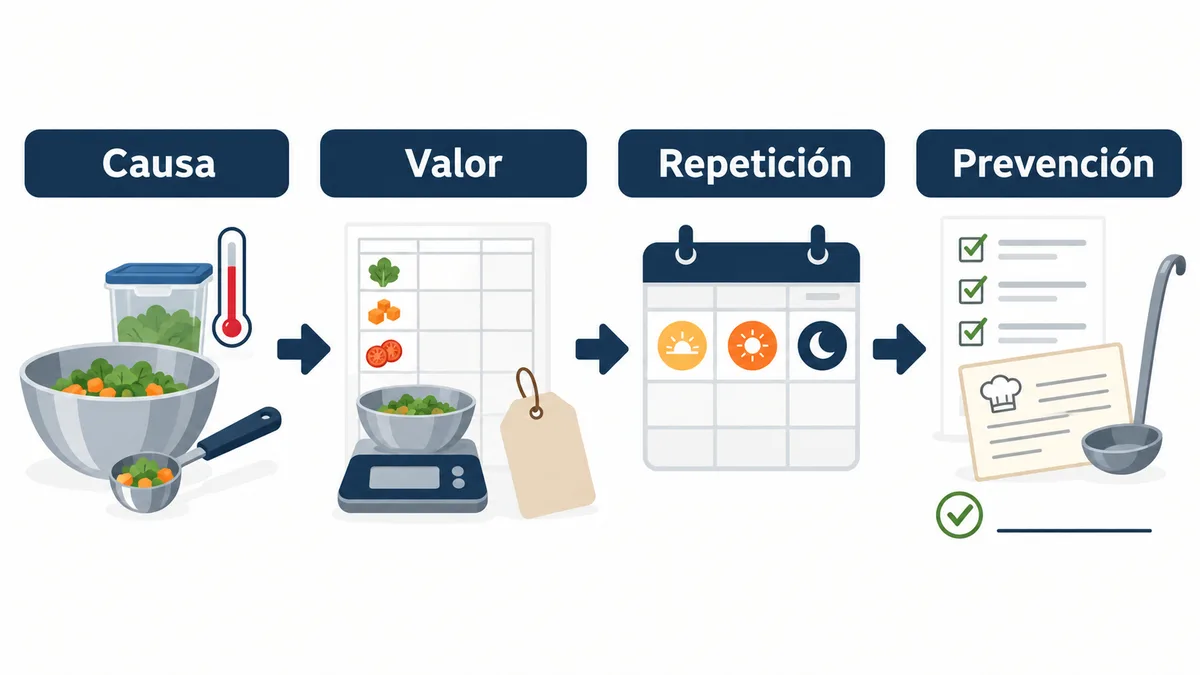
How it works
Wobistro preserves the source, identifies the exception, prepares an action within permissions, and records the responsible person's decision. Every result returns to the history so the next shift starts with context.
- 1. Describe the event without names: what, when, where.
- 2. Keep evidence: photo, ticket, reading, batch.
- 3. Classify cause, value, recurrence.
- 4. Propose one small prevention for the next shift.
- 5. The owner decides and is recorded. Review the system, not the person.
Dining-room example with fictional data
Fictional midday shift: leftover garnish from a portion outside standard. Record: cause prep, a fictional number of portions, recurrence 3 shifts in a row, prevention adjust the ladle and review the recipe at shift change. Decision recorded by a fictional manager. Everything returns to history. This example does not represent real losses for any customer.
Where to continue
Check terms in Hospitality operations glossary, choose Tools to review before deciding, start with Templates for starting with clean data and keep the case in Reports that preserve evidence. Related procedures in Resources.
Try the cause-value-recurrence-prevention record with fictional data, no card.
Reviewed
Source: Wobistro · 2026-08-12