
Theoretical cost is what you should have spent based on recipes and sales. Actual cost is what really left inventory. The gap tells you where to look, not who to blame.
The 3 formulas
- 1. Actual cost = Opening inventory + Purchases − Closing inventory
- 2. Theoretical cost = Sum of (recipe cost × units sold)
- 3. Variance = Actual cost − Theoretical cost / Variance % = Variance ÷ Sales × 100
General external reference, not a Wobistro rule: a healthy variance is often targeted below 2–3%. Validate the target with your own operation.
Example with fictional data
Fictional example data, not customer results:
| Concept | Fictional example |
|---|---|
| Period sales | USD 10,000 fictional |
| Theoretical cost | USD 3,000 fictional (30.0%) |
| Actual cost | USD 3,250 fictional (32.5%) |
| Variance | USD 250 fictional / 2.5 pp |
If the variance repeats on the same ingredient or shift, check the causes below before changing prices or recipes.
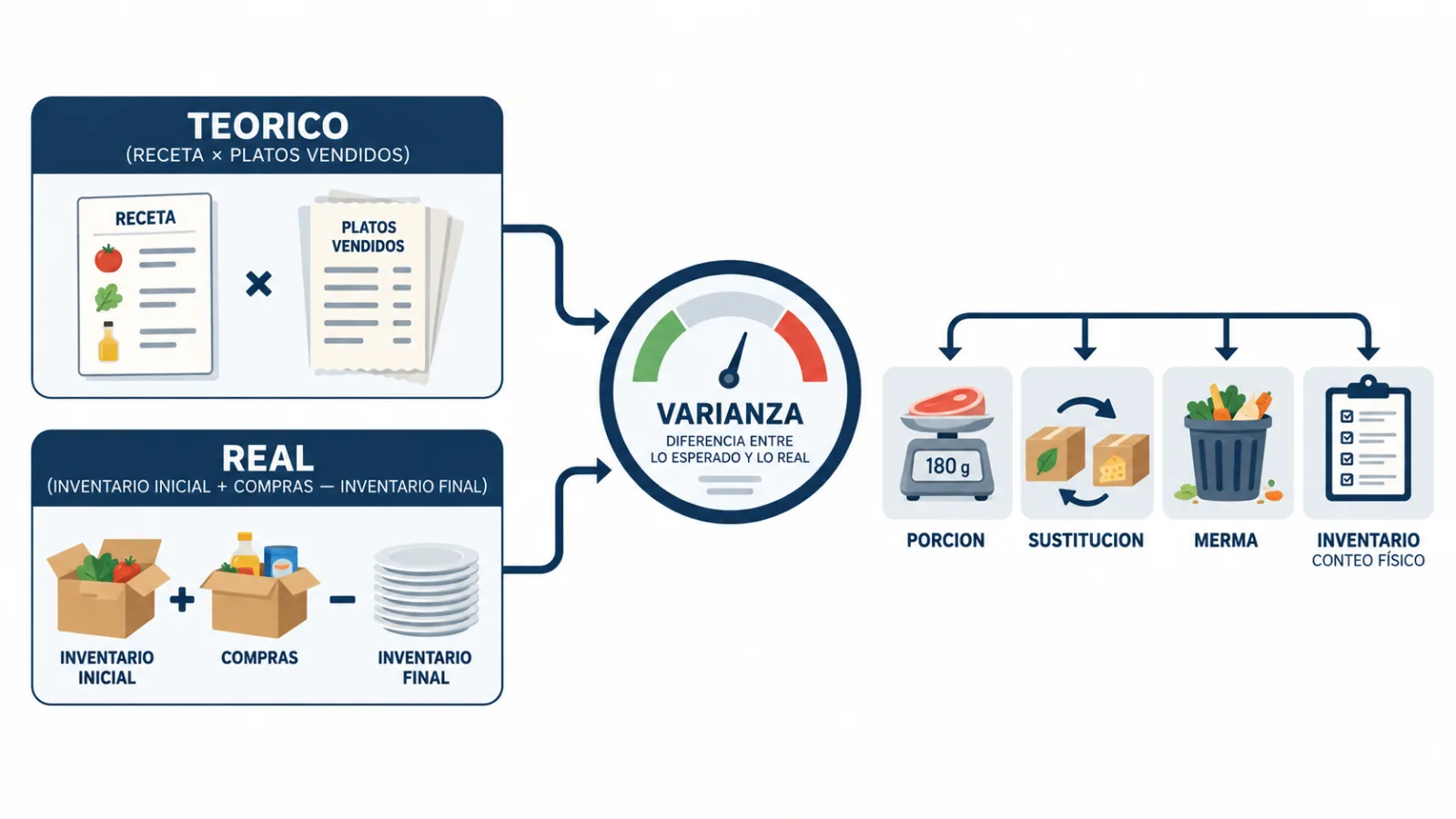
Reading the gap without blaming the team
- 1. Portion: do weights and utensils match the recipe?
- 2. Substitution: were replacements recorded when stock ran out?
- 3. Waste: was prep, expiry, and return waste recorded?
- 4. Inventory: do counts and purchases share the same date cut and unit?
How it works
Wobistro preserves the source, identifies the exception, prepares an action within permissions, and records the responsible person's decision. Every result returns to the history so the next shift starts with context.
Next step
Try this flow with fictional data. See it in action — try with fictional data Back to Resources
Hospitality operations glossary, Templates for starting with clean data and Tools to review before deciding.
Reviewed
Source: Wobistro Editorial · 2026-08-12