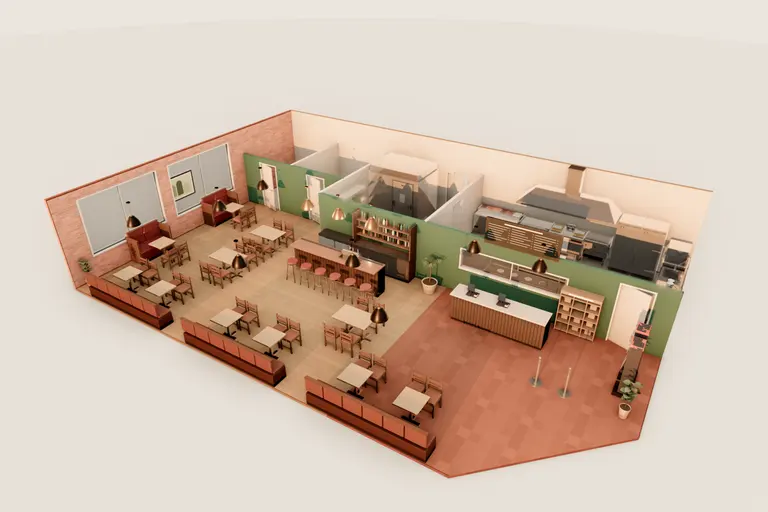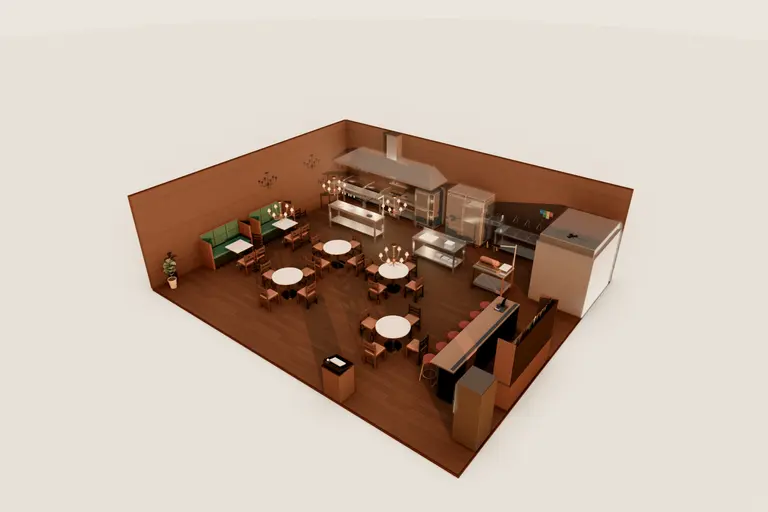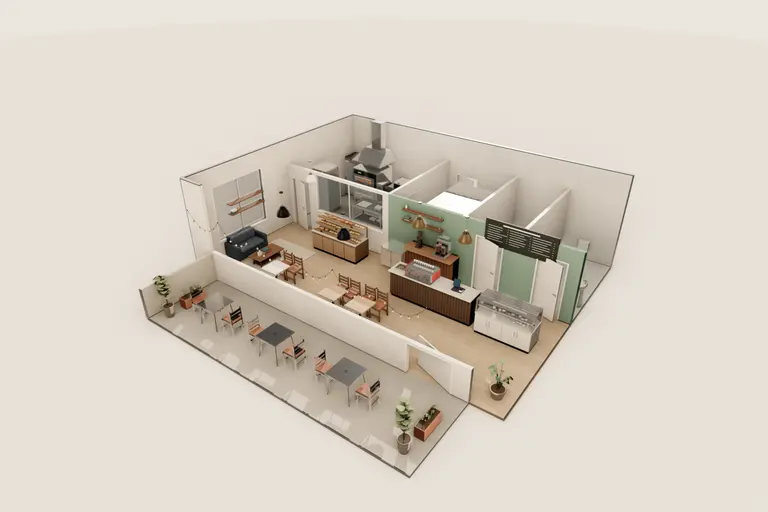
Restaurant equipment list: what each concept needs
What a fast-casual restaurant, casual dining room, coffee shop, bar and pizzeria need at 80 seats, sized by Wobistro’s simulator, plus certification checks.
Short answer
Start from the menu: every item needs equipment that can make it at the busiest quarter-hour, plus refrigeration, ice, dish, sinks and a hood over anything that makes grease or smoke. At 80 seats Wobistro’s simulator proposes 26 pieces of 15 kinds for a fast-casual restaurant and 23 of 17 kinds for casual dining. Buy equipment certified to a recognized sanitation standard, and compare ENERGY STAR models where they exist.

Build the list from the menu, not from a catalogue
Equipment lists copied from a catalogue tend to buy the wrong things: a six-burner range nobody uses and one fryer too few. A list that works starts from the menu. For each item, ask which piece of equipment makes it, how many portions that piece must produce at the busiest quarter-hour, and how many portions one unit can dependably produce. The number of units is the first divided by the second, rounded up. Everything else follows from covers per day: ice, refrigeration, dish capacity and the number of order points.
This is the method Wobistro’s simulator uses, with each rate labelled as sourced, recalled or estimated on the methodology page. Health departments ask for the result in the same form: the Conference for Food Protection plan review guide asks for an equipment schedule listing each item’s make and model and whether it is certified to a sanitation standard [1].
Equipment at 80 seats, by concept
Here is what the simulator proposes for five 80-seat concepts with their default menus, before brands and models are chosen. Widths are shown where equipment is sized by length rather than count.
| Equipment | Fast casual | Casual dining | Café | Bar | Pizzeria |
|---|---|---|---|---|---|
| Griddle | 1 × 3.9 ft | — | 1 × 2 ft | — | — |
| Fryer | 2 | 1 | — | 1 | 1 |
| Refrigerated prep rail | 1 | 1 | — | 1 | 1 |
| Beverage dispenser | 2 | — | 1 | — | 2 |
| Exhaust hood | 1 × 7.9 ft | 1 × 10.8 ft | 1 × 9.8 ft | 1 × 3 ft | 1 × 27.6 ft |
| Undercounter dish machine | 1 | 1 | 1 | 1 | 1 |
| Ice machine, about 500 lb a day | 3 | 1 | 3 | 2 | 2 |
| Walk-in cooler | 2 | — | 2 | — | 1 |
| Reach-in freezer | 2 | 1 | 2 | 1 | 1 |
| Hand sink | 3 | 4 | 3 | 3 | 3 |
| Three-compartment sink | 1 | 1 | 1 | 1 | 1 |
| Point of sale | 2 | 2 | 3 | 2 | 2 |
| Kitchen display | 2 | 2 | 2 | 1 | 1 |
| Heated pass | 1 | 1 | 1 | 1 | 1 |
| Prep table | 2 | 1 | 2 | 1 | 2 |
| Charbroiler | — | 1 × 2 ft | — | — | — |
| Six-burner range | — | 1 | — | — | — |
| Combi oven | — | 1 | — | — | — |
| Bar counter | — | 1 × 9.8 ft | — | 1 × 11.5 ft | — |
| Reach-in fridge, two door | — | 2 | — | 2 | — |
| Espresso machine, two group | — | — | 3 | — | — |
| Convection oven | — | — | 2 | — | — |
| Beer tap tower | — | — | — | 1 | — |
| Deck pizza oven | — | — | — | — | 5 |
Read the table as a starting point, not a shopping list. Some patterns are worth noticing:
- The fast-casual line is a griddle and two fryers: one vat for fries and one for fried chicken, which keeps allergens and flavours apart and covers a breakdown.
- Casual dining has the widest line (charbroiler, range, combi oven, fryer) but each piece is lightly loaded, because a table-service room serves far fewer covers per seat. It needs a heated pass and a bar.
- The coffee shop is limited by espresso, not by cooking: the simulator counts 3 two-group machines at the peak. See the coffee shop layout guide.
- The bar is sized by length of bar, beer taps and ice; its small kitchen needs only a fryer and a cold rail.
- The pizzeria count of 5 deck ovens comes from the simulator’s estimated 20 pizzas an hour per oven, and it implies a 27.6 ft hood. A conveyor oven, rated in the simulator at 57 pizzas an hour from a retailer listing, changes the line completely; this is exactly the kind of decision to test before you buy.
Open any of these concepts in the planning numbers pages to see the same list at 40, 120 and 160 seats, with staffing by station.
The cook line: sizes and real throughput
Griddles are bought by width. Garland’s Master Series production griddle and Star’s Ultra-Max heavy-duty gas griddles are both offered in 24, 36, 48, 60 and 72 inch widths [2][3]. Wobistro sizes the griddle from patties per hour per foot of plate: its default is about 58 patties per foot per hour, an estimate with no published source that you should replace by timing your own line.
Fryers are bought by oil capacity and rated by pounds of product per hour. Pitco’s SG14S, a 40 to 50 lb gas fryer, is rated by the manufacturer to cook 88 lb of fries an hour [4]. Wobistro’s simulator uses about 70 lb an hour for a vat of that size, taken from another manufacturer’s manual, and then counts on only 70 percent of it at the peak. The gap is deliberate: a fryer’s rating assumes continuous loading at full recovery, which rarely survives a real rush with mixed orders.
The kitchen capacity calculator does this arithmetic for fryers, griddle width and the hood from covers per day and your menu mix; with its default burger menu at 250 covers a day it gives 2 fryers and a 2 ft (0.6 m) griddle.
Sanitation certification
The FDA Food Code model says that food equipment certified or classified for sanitation to a recognized American National Standard, by a certification program accredited by the American National Standards Institute, is deemed to comply with the Code’s equipment design and construction rules [5]. FDA publishes the list of standards it recognizes for this purpose [6]. The ones a restaurant meets most often:
| Standard | Covers |
|---|---|
| NSF/ANSI 2 | Food equipment (tables, sinks, shelving and similar) |
| NSF/ANSI 3 | Commercial warewashing equipment |
| NSF/ANSI 4 | Commercial cooking, rethermalization and powered hot food holding equipment |
| NSF/ANSI 7 | Commercial refrigerators and freezers |
| NSF/ANSI 8 | Commercial powered food preparation equipment |
| NSF/ANSI 12 | Automatic ice making equipment |
Used and imported equipment is where certification problems appear. Check the data plate before you buy, and keep the specification sheets: you will attach them to the equipment schedule for plan review (see health department plan review).
Energy: where ENERGY STAR applies
ENERGY STAR certifies commercial refrigerators and freezers, ice makers, dishwashers, ovens, griddles, fryers, steam cookers, hot food holding cabinets, coffee brewers and electric cooktops [7]. For fryers, ENERGY STAR says certified standard-vat gas models are 30 percent more energy efficient than standard models, saving about 50 million BTU and $560 a year, and certified electric models about 17 percent, saving about 3,000 kWh and $400 a year; certified fryers must reach a cooking efficiency of at least 50 percent for gas and 80 percent for electric [8]. Equipment that runs all day, such as fryers, refrigeration and ice machines, is where the rating pays back first.
The support equipment people forget
Cooking equipment gets the attention; support equipment causes the problems. For the 80-seat casual restaurant above, the simulator adds:
- Ice: about 450 lb a day on a busy day, at the simulator’s default of about 1.5 lb per cover, so 1 ice machine rated at about 500 lb a day.
- Dish: 19 racks an hour at peak, which an undercounter dish machine handles.
- Refrigeration: about 86 cu ft of chilled stock for 3.5 days between deliveries, so 2 × reach-in fridge, two door, plus freezer space at a quarter of that.
- Sinks: hand sinks near every work area and a three-compartment sink, even with a dish machine (see sink requirements).
- The hood over every appliance that makes grease or smoke (see hood requirements).
Equipment checklist
- List every menu item and the piece of equipment that makes it.
- Size each piece for the busiest quarter-hour, using a rate you trust or have timed.
- Check every item is certified to a recognized sanitation standard, and keep the spec sheets.
- Compare ENERGY STAR models for fryers, refrigeration, ice machines, dishwashers and ovens.
- Add ice, dish, refrigeration, sinks and the hood before you total the budget.
- Confirm utilities for each item: gas, electrical load, water and drains.
- Leave room under the hood for the next size up.
Every family in the equipment catalogue lists its sizes, utilities and simulator capacity, and the studio places them in your plan with the hood, sink and aisle checks running.
Work it out for your venue
- Commercial kitchen equipment catalogue
Sizes, utilities and simulator capacity for each equipment family Wobistro can place in a plan.
- Kitchen capacity calculator
Fryers, griddle width and hood size from covers per day and your menu mix.
- Planning numbers by concept
Simulated covers, crew, kitchen size, hood and ticket times for seven restaurant concepts at four sizes.
- Open the Wobistro studio
Start from photos, a floor plan or an example venue and edit it in 3D, with the simulator built in.
Questions
What equipment do I need to open a restaurant?
It depends on the menu. At 80 seats Wobistro’s simulator proposes 26 pieces for a fast-casual burger restaurant, 23 for a casual dining restaurant, 28 for a coffee shop, 20 for a bar and 25 for a pizzeria, counting cooking, refrigeration, ice, dish, sinks, the hood and the point of sale.
How many fryers does a restaurant need?
Divide the fried portions at the busiest quarter-hour by what one fryer can dependably produce. For 250 covers a day with a burger-and-fries menu, Wobistro’s kitchen capacity calculator gives 2 fryers, one vat for fries and one for fried proteins so allergens and flavours stay apart.
Does restaurant equipment need to be NSF certified?
The FDA Food Code model treats food equipment certified to a recognized American National Standard by an ANSI-accredited certification program as meeting its equipment design rules. FDA’s list of those standards is mostly the NSF/ANSI series. Your health department decides what it accepts, and plan reviewers ask which items are certified.
Are ENERGY STAR fryers worth it?
ENERGY STAR says certified standard-vat gas fryers are 30 percent more energy efficient than standard models and save about $560 a year, and certified electric fryers about 17 percent and $400 a year. Fryers run for hours every day, so the saving usually matters more than for equipment used briefly.
Sources
- Conference for Food Protection (copy hosted by Montana DPHHS), Plan Review for Food Establishments, 2016, Contents and format of plans and specifications. Accessed November 22, 2026.
- Garland (manufacturer), Single-sided griddles, Master Series. Accessed November 22, 2026.
- Star Manufacturing (manufacturer), Heavy-duty griddles, Ultra-Max. Accessed November 22, 2026.
- Pitco (manufacturer spec sheet, hosted by a dealer), SG14S gas fryer specification sheet, Performance characteristics. Accessed November 22, 2026.
- U.S. Food and Drug Administration, Food Code 2022 (January 18, 2023 version), §4-205.10. Accessed November 22, 2026.
- U.S. Food and Drug Administration, National Retail Food Team, List of American National Standards for Food Equipment (fact sheet, December 10, 2019). Accessed November 22, 2026.
- ENERGY STAR (U.S. EPA), Commercial Food Service Equipment. Accessed November 22, 2026.
- ENERGY STAR (U.S. EPA), Commercial Fryers. Accessed November 22, 2026.
Figures marked as Wobistro estimates come from the simulator defaults described in our methodology. Found an error? Tell us and we will correct it under our editorial standards.
Related guides
More on commercial kitchen designHow big should a restaurant kitchen be?
Size a restaurant kitchen from the menu and peak covers rather than a fixed ratio, with worked examples for five concepts and kitchens from 100 to 600 covers.
Commercial kitchen hood requirements: Type I, Type II and airflow
When a restaurant needs a Type I or Type II hood, how far it must overhang, clearances, and how exhaust airflow is set, with a worked sizing example.
How much does it cost to open a restaurant? Build the budget line by line
Build a US restaurant opening budget from the bottom up: equipment priced from a simulated list, build-out, pre-opening costs, a cash reserve and break-even.
Coffee shop layout: designing a café around the queue
Lay out a coffee shop from the queue backwards: order point, espresso bar, handoff and seats, with ADA counter rules and simulated baristas for 30 to 60 seats.